
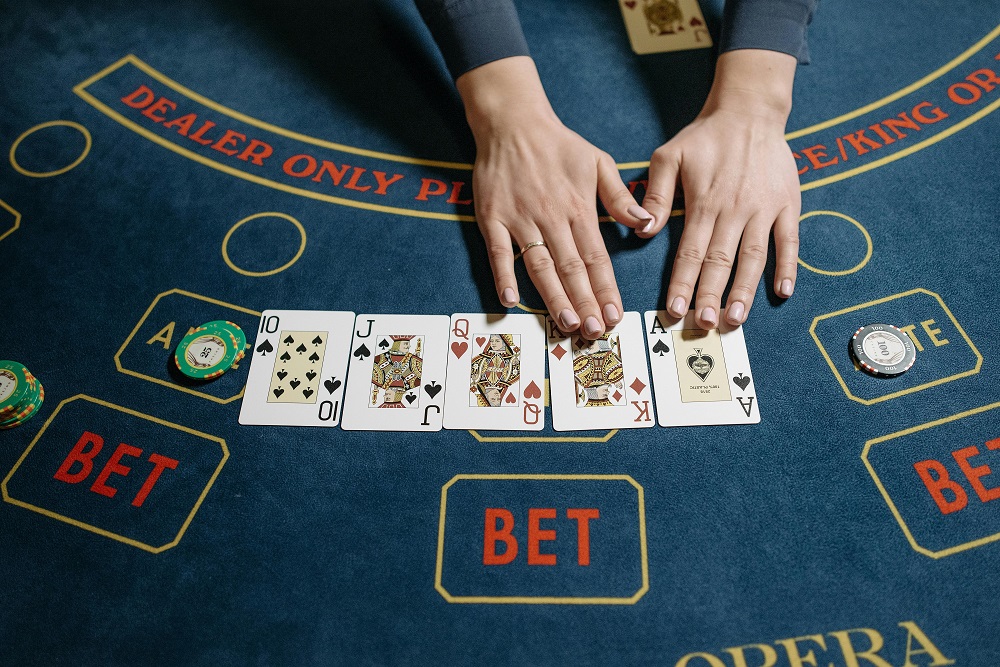

When most people observe a game of cards, they see a casual social activity, a recreational pastime, or a contest of pure luck dependent on the shuffle of a deck. Whether it is a family gathering playing Hearts around a kitchen table or a high-stakes Texas Holdem tournament broadcast on television, the surface-level mechanics seem deceptively simple. You receive a hand, match suits or values, and hope the remaining cards fall in your favor.
Beneath this recreational exterior lies a complex system of mathematical probability, psychological warfare, resource allocation, and cognitive conditioning. Card games function as interactive micro-economies and strategic simulators. Engaging in structured card play regularly exercises the prefrontal cortex—the region of the brain responsible for executive functions, planning, and decision-making. By forcing players to operate under conditions of imperfect information and fluid risk, card games serve as a premier training ground for sharpening real-world strategic thinking.
Operating and Deciding Under Imperfect Information
The most critical distinction between card games and other classic strategy games like chess is the presence of hidden variables. Chess is a game of perfect information. Both players can see every single piece on the board at all times, meaning success relies purely on calculating combinations and looking several moves ahead without any environmental uncertainty.
Card games operate on the principle of imperfect information. You know your own cards, and you can see whatever community cards or discard piles are visible on the table, but you have no direct knowledge of your opponent holdings or the exact order of the remaining deck. This structural hiddenness mirrors the realities of corporate business, geopolitics, and daily life.
Strategic thinking in an uncertain environment requires a transition away from rigid, absolute planning and toward probabilistic reasoning. A proficient card player cannot say with absolute certainty that an opponent holds a specific card. Instead, they must assign percentages to varying scenarios based on past behavior, mathematical card counting, and betting patterns. Mastering this mental calculation trains the human brain to comfortable weigh risks, evaluate corporate market entries, and make critical decisions when full data sets are unavailable.
Critical Cognitive Skills Developed Through Card Play
The mastery of complex card games requires the simultaneous execution of several advanced cognitive disciplines. Over time, these habits become automated mental models that translate directly into professional and personal problem-solving capabilities.
-
Advanced Resource Management: In many tactical card games, such as Bridge, Spades, or collectible trading card games, your cards represent finite resources. Every turn requires you to decide whether to deploy a high-value asset early to secure a small immediate gain or hoard that asset for a critical endgame scenario. This constant evaluation helps players master the art of long-term asset budgeting and opportunity cost analysis.
-
Pattern Recognition and Data Synthesis: A deck of cards features a rigid structural distribution of numbers, colors, and suits. As cards are played, the pool of remaining possibilities shrinks. Skilled players track these discards, synthesising real-time data to reconstruct the probable layout of the unseen cards. This exercise enhances the brain ability to identify subtle trends and anomalies within large streams of chaotic market information.
-
Delayed Gratification and Long-Term Vision: Novice players frequently focus entirely on the immediate turn, attempting to win every single hand or trick right away. Strategic players understand that losing a minor skirmish early can position them to win the broader war later. This conditioning teaches the value of patience, tactical retreats, and executing multi-step plans that require months or years to yield results in real-world scenarios.
The Psychology of the Opponent: Developing Emotional Intelligence
True strategic thinking extends far beyond cold mathematical calculations. Because card games are contested against other human beings, they require a deep understanding of psychological dynamics, empathy, and behavioral analysis.
Theory of Mind
In psychology, the Theory of Mind refers to the cognitive capacity to attribute mental states—beliefs, intents, desires, and knowledge—to oneself and others, understanding that others have beliefs that are different from one’s own. Card games are a pure exercise in this concept. To win, you must constantly ask yourself: What does my opponent think I have? How will they react if I play this card? Are they demonstrating genuine strength or attempting an elaborate bluff?
Emotional Regulation and the Prevention of Tilt
Maintaining a calm, analytical demeanor when a game takes a negative turn is a hallmark of an advanced strategist. When a player suffers a bad mathematical beat due to a random card draw, it is incredibly easy to fall into a state of frustration known as tilt. Tilt destroys logical decision-making, leading to over-aggressive, reactionary choices. Card games provide a safe, low-stakes sandbox where individuals can practice emotional regulation, learning to accept short-term bad luck while remaining strictly committed to their long-term analytical framework.
Game Theory and Tactical Adaptability
Strategic thinking is never a static blueprint. A strategy that works perfectly against one opponent might fail catastrophically against another who utilizes a completely different style of play. Card games introduce players to the fundamentals of Game Theory, which analyzes mathematical models of strategic interaction among rational agents.
In a standard card game, you must continuously adjust your baseline strategy to counter the tendencies of the table. If your opponents are playing overly aggressive and reckless, the optimal strategic response is often to tighten your requirements and play conservative, waiting for them to make a costly error. If the table is playing passive and fearful, strategy dictates that you increase your aggression to capture uncontested pots or resources. This fluid tactical shifting fosters cognitive flexibility, preparing individuals to pivot corporate strategies or career paths when external macroeconomic conditions shift unexpectedly.
Frequently Asked Questions
Which specific card games are best for improving corporate business strategy?
Games like Poker and Bridge are highly regarded in the corporate business environment because they directly simulate market dynamics. Poker emphasizes risk assessment, capital allocation, reading human behavior, and executing calculated bluffs under intense pressure, which aligns closely with venture capital and corporate negotiation. Bridge focuses heavily on partnership communication, precise data sharing, and long-term project planning, mimicking the team dynamics required to execute large corporate initiatives.
How does playing card games regularly prevent cognitive decline?
Engaging in mentally stimulating activities like card games builds cognitive reserve, which is the brain resilience to neuropathological damage. The continuous need to memorize discarded cards, calculate shifting mathematical probabilities, and adapt to changing strategies stimulates neuroplasticity. This mental exercise strengthens synaptic connections throughout the prefrontal cortex and hippocampus, which helps delay the onset of age-related memory loss and cognitive decline.
Can casual card games like Solitaire build strategic thinking skills?
While Solitaire lacks the social dynamics, theory of mind, and psychological warfare of multiplayer games, it still offers clear cognitive benefits. Solitaire is a lesson in sequential planning, spatial organization, and risk mitigation. It forces the player to analyze how a single choice made early in the stack will restrict or liberate options down the line, building foundational analytical skills and patience without the pressure of an opponent.
What is the difference between tactical thinking and strategic thinking in card games?
Tactical thinking involves reacting to the immediate situation on the table during a single turn, such as identifying the optimal card to play to win the current trick. Strategic thinking is the overarching macro-plan that spans the entire duration of the match or tournament. Strategy dictates how you manage your total chip stack or point accumulation over multiple hours, deciding when to take high-risk gambles and when to preserve your resources for future rounds.
How do collectible card games differ from traditional fifty-two-card deck games in developing intellect?
Collectible card games introduce a significant layer of pre-game preparation known as deck building. Before the match even begins, players must analyze hundreds of potential cards to engineer a customized forty-card or sixty-card deck that features internal synergy, resource balance, and win conditions. This process exercises abstract systems engineering, meta-analysis, and predictive counters, whereas traditional games focus more heavily on real-time execution and probability calculation within a fixed, standardized system.
Does luck dictate the outcome of card games more than skill?
In the short term, luck can dominate any individual card game due to the inherent randomness of the shuffle. A novice can easily defeat a grandmaster in a single hand if they receive a mathematically superior run of cards. However, over a large sample size of hundreds of hands, the element of random luck neutralizes completely. The superior strategist who consistently makes decisions with a positive expected value will inevitably emerge profitable, making card games a definitive contest of long-term skill.

Comments are closed.