
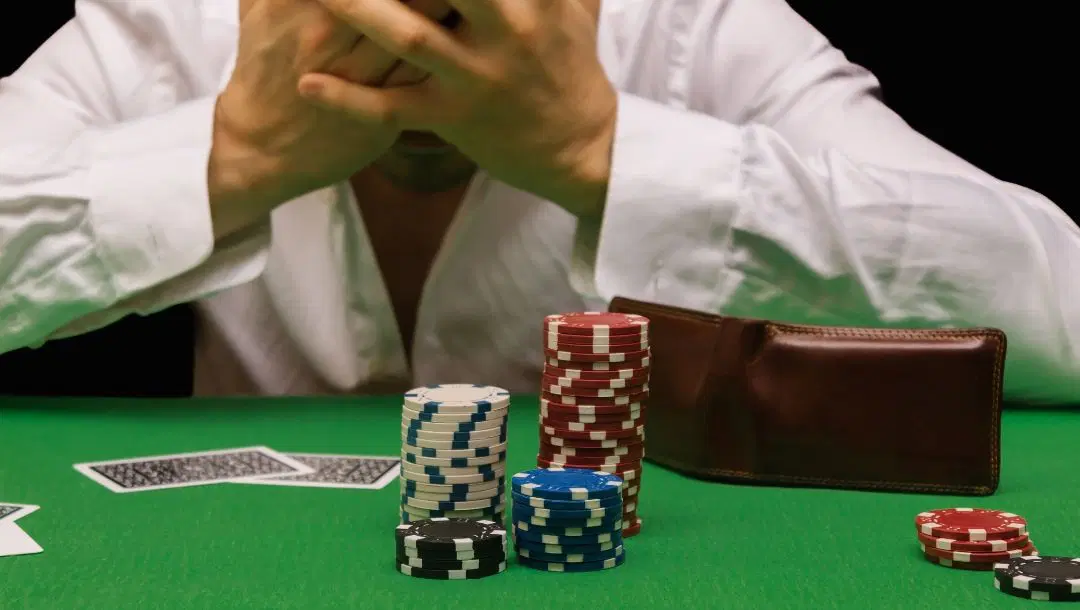

Blackjack is unique in the casino ecosystem because it is widely regarded as a game of mathematical strategy rather than pure, unadulterated chance. Unlike a slot machine or a roulette wheel, where every single event is completely independent of the last, blackjack features a mathematical memory. The cards dealt in previous rounds alter the composition of the remaining deck, shifting the statistical advantage between the dealer and the player.
Because blackjack offers some of the lowest baseline house edges in gaming, it frequently attracts analytical thinkers and disciplined strategists. Yet, despite its reliance on logic, blackjack remains a psychological battleground. The most devastating failure point for a player is not a lack of understanding of basic strategy rules, but a cognitive breakdown known as chasing losses. This behavioral phenomenon occurs when a player experiences a string of negative outcomes and chooses to increase their wager sizes to recover their lost capital rapidly. While emotionally compelling, chasing losses is mathematically flawed, structurally unsustainable, and serves as the single fastest pathway to complete financial insolvency at the tables.
The Core Mathematics of Blackjack: Understanding Table Variance
To understand why chasing losses fails, one must first comprehend the concept of statistical variance. When a blackjack game is played perfectly according to the mathematically proven basic strategy chart, the house edge hovers around one-half of one percent. This percentage means that over a massive sample size of hundreds of thousands of hands, the casino expects to retain roughly fifty cents out of every one hundred dollars wagered.
However, in the short term, statistics do not distribute smoothly. A player will routinely encounter standard statistical deviations, which manifest as winning streaks or severe losing streaks. The human mind is naturally poorly equipped to handle short-term randomness. When a player loses six consecutive hands, they often assume that they are due for a win.
This assumption is a psychological illusion known as the gambler fallacy. If the deck is shuffled regularly via a continuous shuffling machine, or if the dealer has only gone through a fraction of a multi-deck shoe, the mathematical probability of winning the next single hand remains virtually identical to the last. Increasing a wager size because you feel you are due for a turnaround means you are exposing larger amounts of capital to an unchanging house advantage.
The Structural Flaw of Progressively Increasing Wagers
The most common execution of chasing losses is the implementation of progressive betting systems, such as the Martingale strategy. In this framework, a player doubles their bet size after every single loss. The theory dictates that when a win eventually occurs, the payout will recover all past losses plus yield a profit equal to the original baseline unit bet.
While this system sounds flawless on paper, it collapses completely under real-world constraints due to exponential mathematical growth and institutional table boundaries:
-
The Reality of Exponential Escalation: If you begin with a modest baseline wager of twenty-five dollars and experience a normal streak of eight consecutive losses, an exponential progression requires your ninth bet to climb to six thousand four hundred dollars just to win back your original twenty-five dollars.
-
Capital Depletion Risks: Very few retail players possess the immense cash reserves required to sustain an elongated losing streak under doubling parameters. The progression will exhaust a standard bankroll far faster than an individual anticipates.
-
Casino Table Limit Restrictions: Every blackjack table features a prominent sign detailing its mandatory minimum and maximum betting boundaries. If a table minimum is twenty-five dollars, the maximum cap is frequently set at two thousand five hundred or five thousand dollars. Even if you possess unlimited funds, you will eventually hit the house ceiling during a sustained losing streak. Once you hit that ceiling, you are legally barred from doubling your bet again, leaving you unable to recover your accumulated losses.
Psychological Distortions and the Loss of Execution Discipline
When a player transitions from playing strategically to chasing losses, their internal mental state shifts from rational analysis to emotional desperation. This psychological shift triggers several cognitive distortions that directly degrade performance accuracy.
Total Abandonment of Basic Strategy
Perfect blackjack execution requires strict adherence to mathematical matrices that dictate whether to hit, stand, double down, or split based on your cards and the dealer upcard. When chasing losses, the urgent desire to win a large bet causes players to make high-risk decisions. A player might fearfully stand on a hard sixteen against a dealer ten because they cannot bear the thought of busting a large wager, or they might over-aggressively double down on an improper hand out of sheer greed, directly inflating the house edge.
The Tilt Phenomenon
Borrowed from poker terminology, tilt describes a state of mental confusion or frustration that impairs decision-making capabilities. A player on tilt is no longer evaluating the shoe, monitoring bankroll units, or tracking playing conditions. They are reacting entirely to adrenaline and cortisol spikes, viewing the dealer as a personal adversary rather than an automated conduit of statistical probabilities.
Bankroll Management as a Structural Shield
The only effective defense against the temptation to chase losses is the rigid implementation of structured bankroll management protocols before you ever sit down at a table. Professional players separate their gaming funds entirely from their daily living expenses, designating a specific pool of capital that can be completely lost without impacting their standard of living.
A sound bankroll framework dictates that a single session buy-in should represent only a small fraction of your total bankroll, and an individual baseline bet should never exceed one to two percent of that session capital. For example, if you have a session bankroll of two thousand dollars, your standard unit wager should hover around twenty-five dollars. This structural cushion allows you to absorb a normal, statistically expected sequence of ten or fifteen consecutive losses without panicking, feeling financially threatened, or deviating from your baseline betting strategy.
Recognizing the Institutional Advantages of the Casino
Lenders and gaming operators design blackjack rules to maximize their structural protections against reactionary players. The casino thrives on player emotional volatility. They understand that if they can keep a player at the table long enough, the law of large numbers will inevitably assert itself, ensuring the house retains its mathematical percentage.
When you chase losses, you drastically increase your average bet size during the exact moments when your emotional control is at its lowest point. This behavioral pattern plays directly into the house business model. By elevating your stakes during a period of negative variance, you transform a minor, manageable financial speedbump into a catastrophic bankroll liquidation, guaranteeing that the house walks away with your capital.
Frequently Asked Questions
What is the difference between basic strategy and a betting progression system?
Basic strategy is a mathematically derived system that dictates the optimal playing decision for every single card combination possible in blackjack. It is designed to minimize the inherent house edge based on raw probability. A betting progression system, such as the Martingale or the Fibonacci sequence, dictates how much money you should wager on subsequent hands based on whether the previous hand won or lost. Betting systems do not alter the underlying rules or probabilities of the cards; they merely change how rapidly your capital is deployed.
How does card counting affect the logic of changing your bet size?
Card counting is the only legitimate method where varying your bet size is mathematically sound. Counters track the ratio of high cards to low cards remaining in the deck. When the deck becomes exceptionally rich in tens and aces, the player probability of getting a blackjack increases, shifting the mathematical advantage away from the house. A card counter increases their bet size solely because the remaining deck composition favors them, never because they are trying to chase back money lost on previous hands.
Why does a continuous shuffling machine make chasing losses even more dangerous?
Continuous shuffling machines return used cards back into the deck immediately after every single round, constantly resetting the deck composition to a baseline state. This completely eliminates the ability to track card distribution or count cards. Because the cards are shuffled instantly, every hand operates under a fixed house edge. Chasing losses against a continuous shuffling machine is highly dangerous because you are increasing wagers against a permanent structural disadvantage with zero opportunity to capture an informational edge.
What should a player do immediately after experiencing a severe losing streak?
The most effective and rational action a player can take after a severe losing streak is to step away from the table completely. Physical separation breaks the psychological cycle of frustration and prevents the onset of tilt. Taking a break allows your adrenaline levels to normalize, giving you the clarity needed to review your bankroll status objectively and decide whether to end the session or return later with a calm, disciplined approach to basic strategy.
Does the dealer showing a weak upcard make a chased bet safer?
No, a dealer showing a weak upcard, such as a five or a six, does not make a chased bet safe. While a five or six represents the highest mathematical probability of a dealer busting, the dealer still successfully makes a qualifying hand more than fifty-five percent of the time. Over-estimating the weakness of a dealer upcard to justify an oversized, emotional wager is a common mistake that regularly results in substantial financial losses.
How do table minimums and maximums protect the casino from betting systems?
Table minimums and maximums act as a structural firewall for the casino. If a table allows unlimited wagering spreads, a billionaire could theoretically utilize the Martingale system indefinitely until they eventually won a hand, erasing the house advantage. By capping the maximum wager, the casino ensures that an exponential doubling progression will hit a legal barrier within a few steps, forcing the player to stop progressing and absorb a massive financial loss.
Can automated casino reward points compensate for the losses incurred while chasing?
Casino reward programs, often referred to as comps, are calculated based on your average bet size and the total time you spend playing at the table. While chasing losses will technically increase your recorded average bet and earn you higher tier points or complimentary meals, these rewards represent only a tiny fraction of the cash lost during a chaotic betting spiral. Attempting to justify high-risk, uncoordinated wagers using the perceived value of casino loyalty perks is an economically flawed strategy.

Comments are closed.